
Elizabeth Taylor’s 24-Karat Gold Cape From the Epic Production of "Cleopatra"
This breathtaking garment was literally fit for a queen, featuring thousands of gold-painted leather strips meant to mimic the wings of a phoenix. Designer Irene Sharaff allegedly worked with a team of dozens to hand-stitch each individual "feather." Despite the film’s massive budget overruns, Taylor’s wardrobe was the most expensive ever created at the time. The cape survived the chaotic production and was sold at auction in 2012 for nearly $60,000.
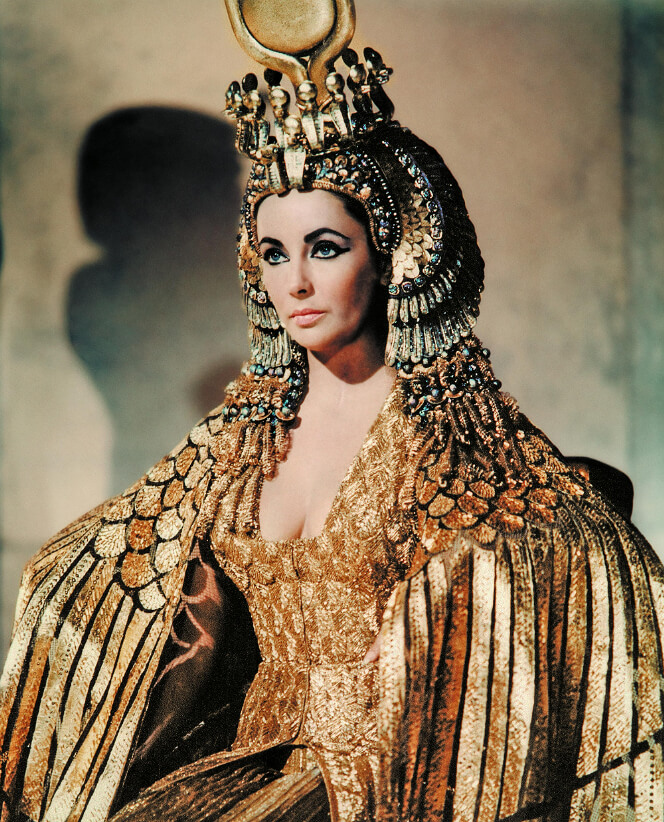
It stands as a testament to the era of "Big Hollywood," where no detail was too small and no amount of gold was too much.
The Heavy Metal Secret Behind Judy Garland’s Ruby Slippers in "The Wizard of Oz"
These shimmering sequins didn’t just appear by magic; they were the result of meticulous craftsmanship by costumer Adrian. While the book featured silver shoes, Technicolor demanded a vibrant red. Interestingly, the slippers were reportedly crafted from white silk pumps covered in tinted georgette and roughly 2,300 sequins. To ensure the young star didn't slip during those iconic "yellow brick road" dance numbers, felt was allegedly glued to the soles.
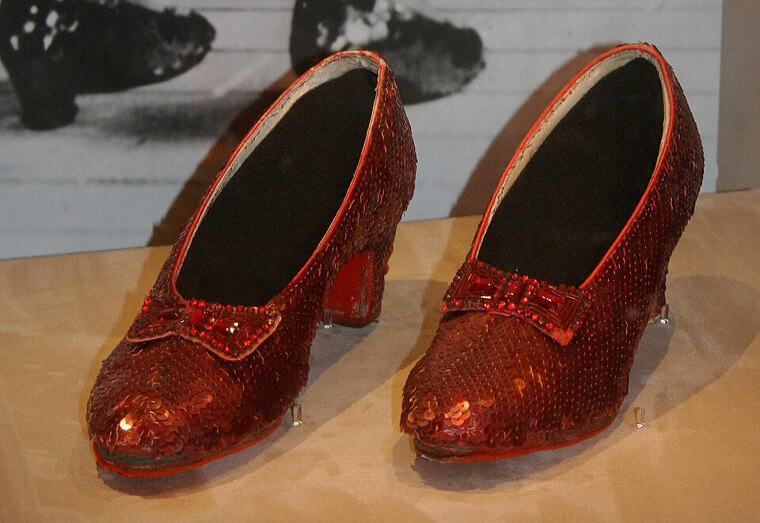
Today, one of the few surviving pairs resides at the Smithsonian, serving as a priceless relic of cinematic history and the most famous footwear in the world.
Marilyn Monroe’s Sublimely Weighted White Cocktail Dress From "The Seven Year Itch"
Designed by William Travilla, this ivory pleated dress became the ultimate symbol of 1950s allure. What many don’t realize is that the fabric was a heavy rayon-acetate crepe, chosen specifically because it held pleats beautifully while still catching the wind from the subway grate. The dress allegedly began to yellow over the decades due to the delicate nature of the synthetic fibers. When it went up for auction in 2011 from Debbie Reynolds' personal collection, it got bought for quite the price.
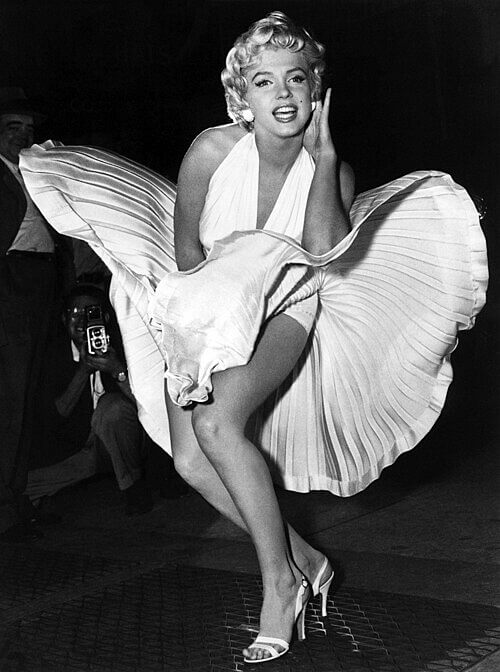
It fetched a record-breaking $4.6 million, proving that some pieces of silk and history are truly worth their weight in gold.
The Structural Engineering of Grace Kelly’s Ethereal Blue Gown in "To Catch a Thief"
Edith Head considered this ice-blue chiffon gown her absolute masterpiece. Created for the masquerade ball scene, the bodice was internally reinforced with rigorous boning to maintain Kelly’s regal silhouette without the need for visible straps. Legend has it that the dress was so delicate that Kelly had to be stitched into it for every take to ensure the drape remained perfect. This garment solidified the "Hitchcock Blonde" aesthetic.
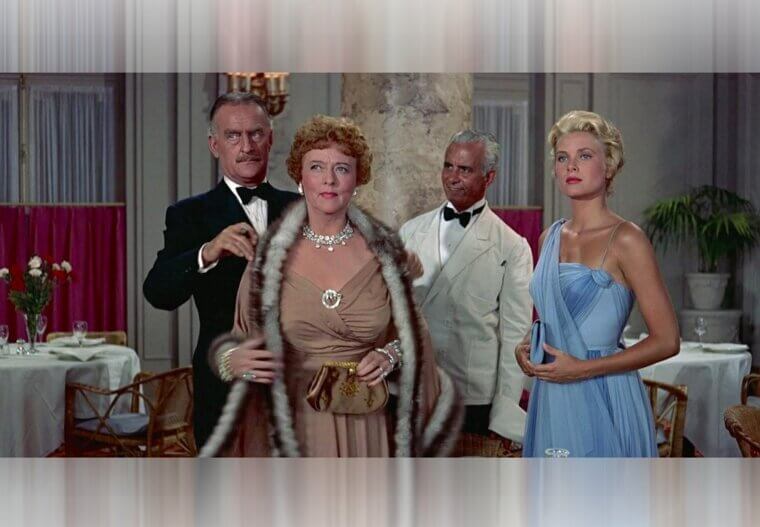
Currently, the original remains in the Paramount Pictures archives, though it is frequently sought after by museums for its masterclass in mid-century textile engineering and elegance.
The Hidden Weights in Vivien Leigh’s Curtain Dress From "Gone With the Wind"
To create the illusion of a dress made from heavy velvet drapery, Walter Plunkett used actual upholstery fabric. The moss-green velvet was reportedly treated with bleach and sunlight to make it look "sun-faded," as if Scarlett O'Hara had truly ripped it from the windows of Tara. Because the fabric was so heavy, internal lead weights were allegedly sewn into the hem to keep the skirt from swaying too wildly during Leigh’s spirited performance.
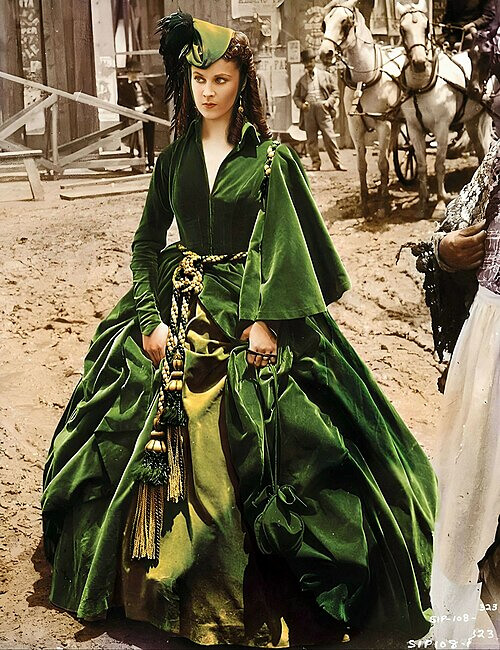
The original dress is now housed at the Harry Ransom Center in Texas, where it underwent an extensive professional restoration project.
Audrey Hepburn’s Disappearing Little Black Dress From "Breakfast at Tiffany’s"
Designed by Hubert de Givenchy, this floor-length satin gown redefined modern sophistication. However, the version seen in the film’s opening was reportedly modified by studio designers because the original Givenchy prototype featured a side slit that showed too much leg for 1961 standards. While Givenchy gifted Audrey several versions, the most famous one was auctioned at Christie’s in 2006 for over $900,000 to benefit a charity in India.
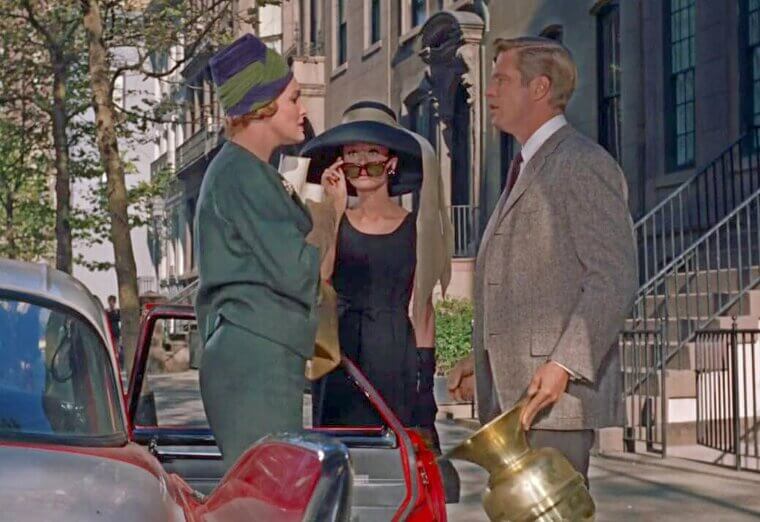
It remains the gold standard for minimalism, proving that a simple silhouette and a strand of pearls can create an immortal fashion moment that spans generations.
Rita Hayworth’s Electric Black Satin Gown From the Noir Classic "Gilda"
Jean Louis crafted this strapless masterpiece with a secret internal harness. To ensure the dress stayed up during Hayworth’s iconic "Put the Blame on Mame" dance routine, a plastic mold was reportedly fitted to her torso under the satin. This allowed her to move with total freedom without any risk of a wardrobe malfunction. The dress is often credited with ushering in a new era of "femme fatale" fashion.
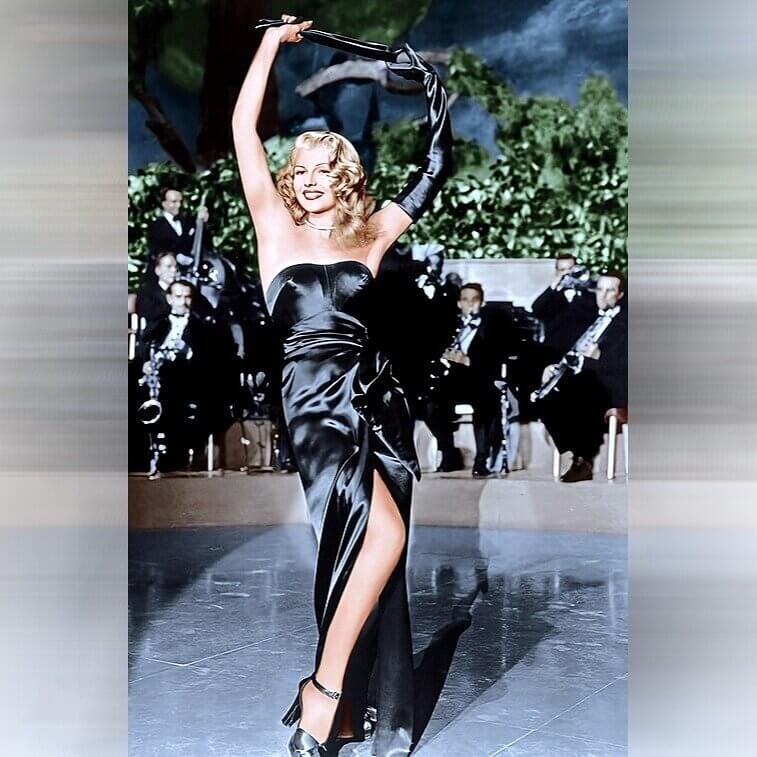
While its current whereabouts are held by a private collector, the design remains a blueprint for every red-carpet mermaid gown seen in the modern era.
Ginger Rogers’ Feathery Gown in "Top Hat" Was an On-Set Nightmare
During the "Cheek to Cheek" sequence, Rogers wore a dress adorned with thousands of ostrich feathers. While it looked beautiful on film, it was reportedly a disaster on set. As she twirled with Fred Astaire, the feathers allegedly flew off in every direction, getting in Fred’s eyes and mouth. He famously nicknamed her "Feathers" after the incident. Despite the chaos, the dress became a symbol of Art Deco luxury.
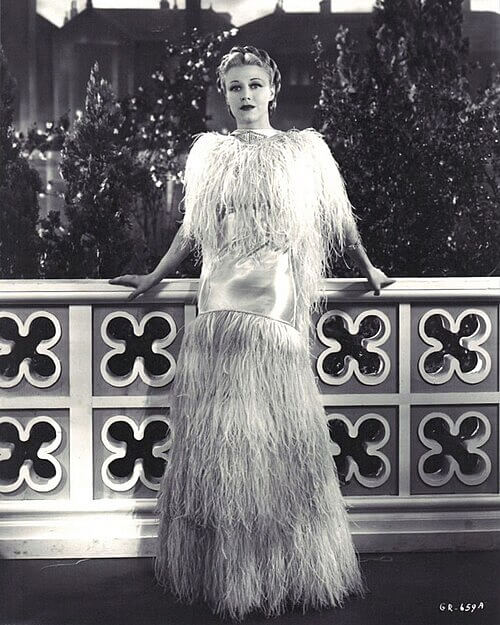
The original garment has sadly been lost to time, but high-quality replicas are often used in dance museums to illustrate the technical difficulties of vintage costume design.
Lucille Ball’s High-Fashion Polka Dots From "I Love Lucy"
While Lucy was known for her comedy, her wardrobe was strictly high-end. Designer Elois Jenssen created the iconic navy-and-white polka dot dress to reflect the "everywoman" of the 1950s, but with a tailored Parisian twist. The dress featured a unique silk-taffeta blend that popped on the early television screens. Interestingly, Lucy was reportedly very particular about the size of the dots, believing they influenced her "on-screen energy."
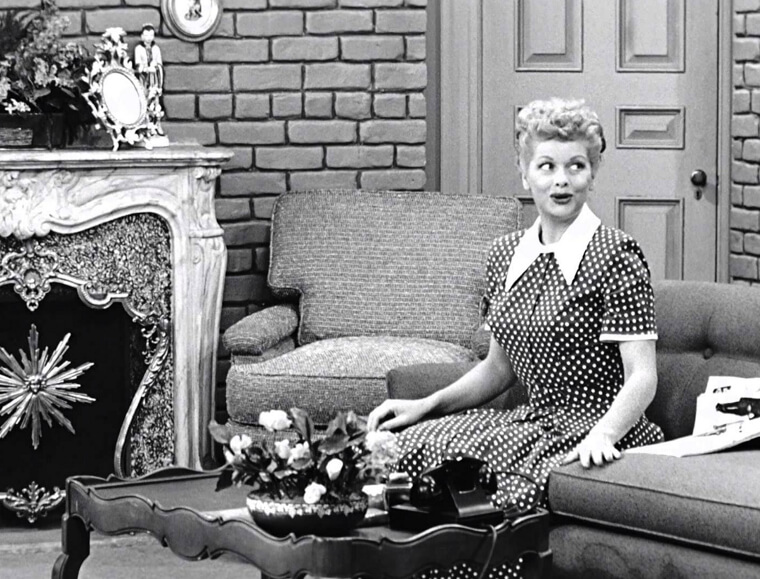
The original dress is a prized possession of the Lucy-Desi Museum in Jamestown, New York, where it continues to inspire fans of the First Lady of Comedy.
Tippi Hedren’s Bird-Proof Green Suit From "The Birds"
Alfred Hitchcock was notorious for his control over wardrobe, and he had Edith Head create six identical versions of this eau-de-nil green suit. The color was chosen specifically because it didn't distract from the tension of the film. During the famous attic scene, the suits were allegedly reinforced with internal padding to protect Hedren from the live birds' talons, though she still reportedly suffered for her art.
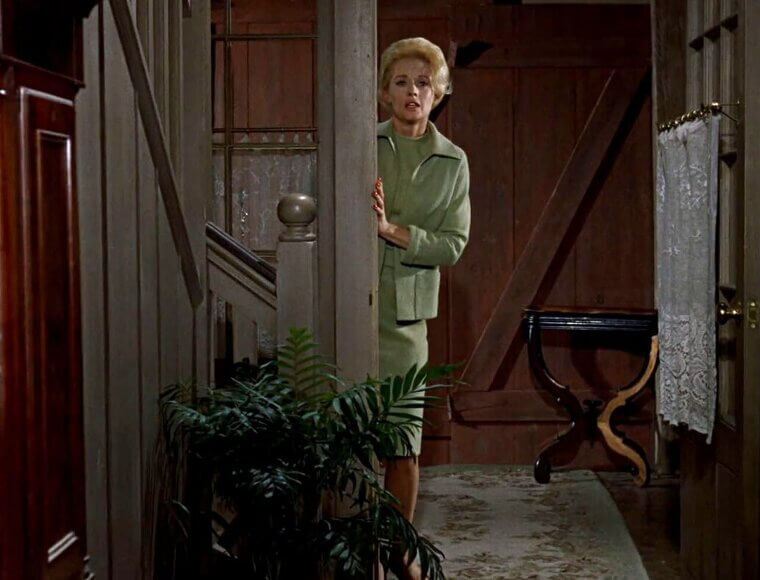
One of these historic suits was sold at auction for nearly $10,000, though many pieces were destroyed during the grueling, week-long filming of the bird attacks.
Bette Davis’s Accidental Brown Party Dress in "All About Eve"
The famous off-the-shoulder look was actually a mistake. Designer Edith Head had created the dress with a different neckline, but when Davis tried it on, the bodice was too large and slipped down her shoulders. Davis reportedly looked in the mirror and said, "Doesn't it look better this way?" and a legend was born. The dark chocolate brown silk-acetate fabric looked black on the black-and-white film, adding to its mysterious, sharp edge.
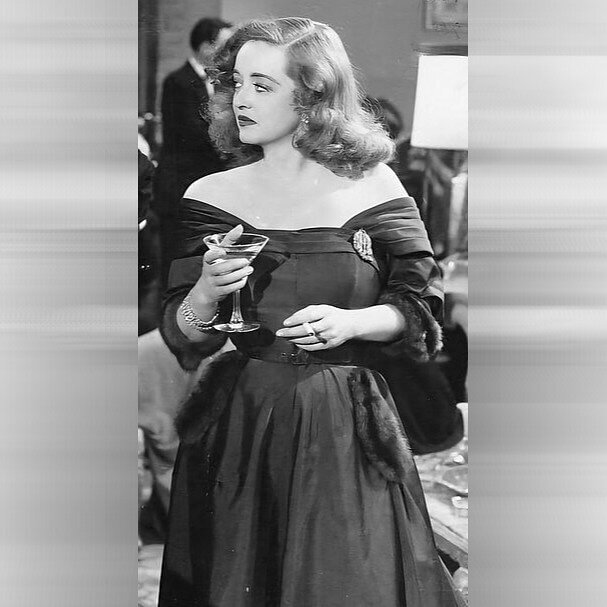
The dress is currently part of the permanent collection at the Costume Institute, celebrated for its perfect blend of character and serendipity.
Julie Andrews’ Rugged Dirndl From "The Sound of Music"
The simple brown pinafore Maria wore when she first arrived at the von Trapp villa was actually a marvel of costume aging. Dorothy Jeakins designed the piece to look "unfashionable" compared to the Baroness’s chic outfits. The fabric was a coarse wool-linen blend that was allegedly distressed with sandpaper to give it a worn-in, humble look. Despite its plain appearance, it remains one of the most recognizable costumes in film history.
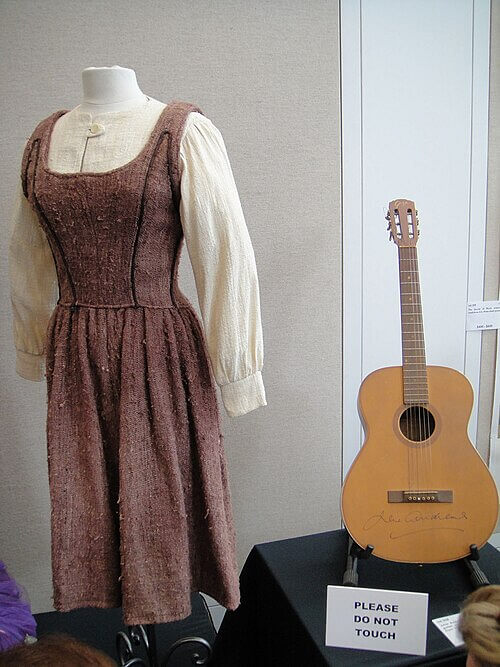
The original outfit was auctioned in 2013 for a staggering $676,000, proving that even "homely" costumes carry immense sentimental and historical value.
The Cinderella Transformation Gown of Leslie Caron in "Gigi"
Cecil Beaton won an Academy Award for the costumes in Gigi, and this white-and-black lace gown was the centerpiece. Representing Gigi’s transition from a girl to a refined lady, the dress featured intricate Chantilly lace and a massive silk bow. Beaton was reportedly obsessive about the period accuracy of the Belle Époque era, insisting on authentic corsetry. The dress allegedly cost a fortune to produce in 1958.
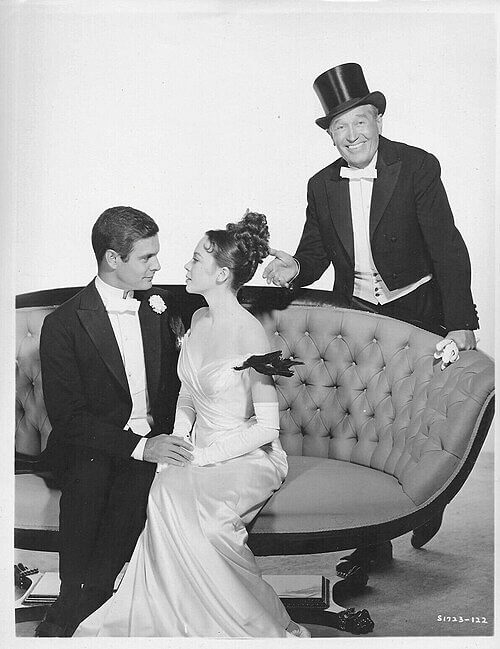
It now resides in the archives of the Warner Bros. Museum, often displayed as the pinnacle of costume design from the final years of the great Hollywood musicals.
The Subversive Men's Suit of Katharine Hepburn in "Woman of the Year"
Hepburn was a rebel who refused to wear skirts off-camera, and she brought that energy to this film. Her high-waisted, wide-leg trousers and sharp blazers were designed by Adrian to highlight her athletic frame. At the time, women wearing trousers was still considered "eccentric." These suits were allegedly tailored with such precision that they influenced the "Power Suit" movement decades later. Hepburn kept much of her wardrobe.
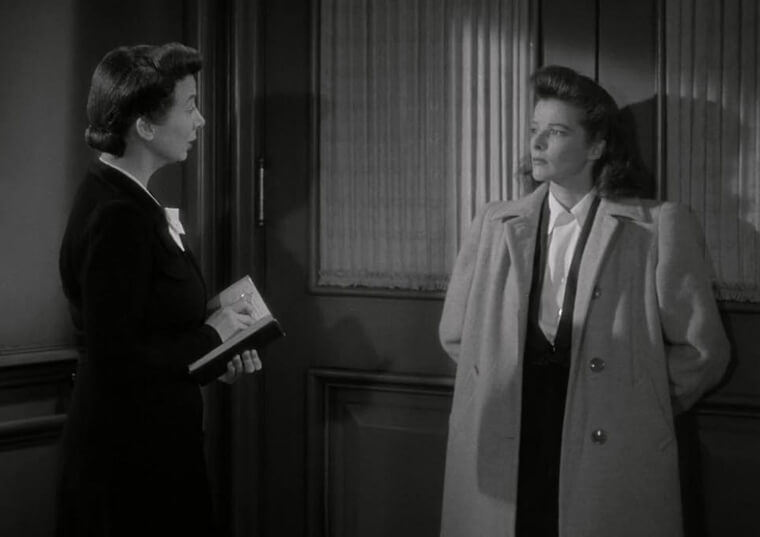
And many of these tailored pieces are now part of the Katharine Hepburn Cultural Arts Center collection, representing her lifelong commitment to personal style and independence.
Elizabeth Taylor’s Slip Dress That Shocked in "Cat on a Hot Tin Roof"
In 1958, seeing a major star spend half a movie in a simple white slip was revolutionary. Helen Rose designed the garment not as underwear, but as a piece of high-fashion silk-satin that clung to Taylor’s curves. It was reportedly weighted at the hem to ensure it draped perfectly and didn't "ride up" during the film’s tense emotional scenes. The dress became so popular that it sparked a nationwide trend for "lingerie-inspired" evening wear.
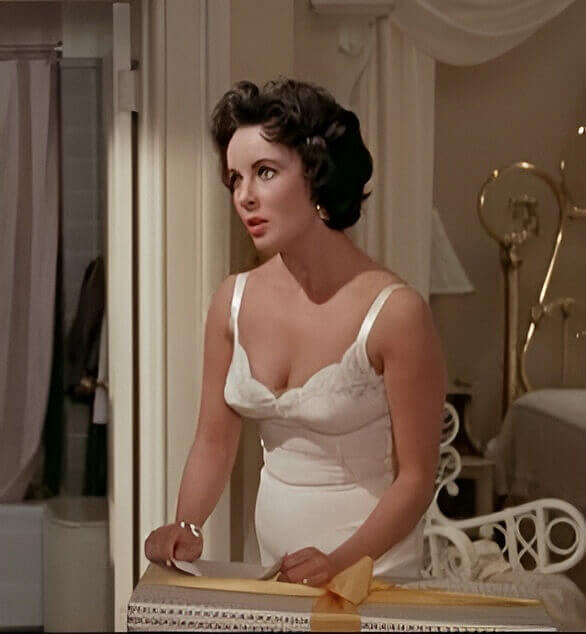
The original slip is currently in a private archive, though its influence can be seen in every "slip dress" trend since.
The Futuristic Gold Lamé of Shirley Eaton in "Goldfinger"
While not a traditional garment, the "wardrobe" of the Bond girl Jill Masterson was entirely made of gold paint and a small gold bikini. At the time, there was a popular urban legend that Eaton allegedly died from "skin suffocation" because her skin couldn't breathe under the paint. This was, of course, false, but the studio took precautions by leaving a small patch of her stomach unpainted. This "costume" became the most enduring image of the 007 franchise.
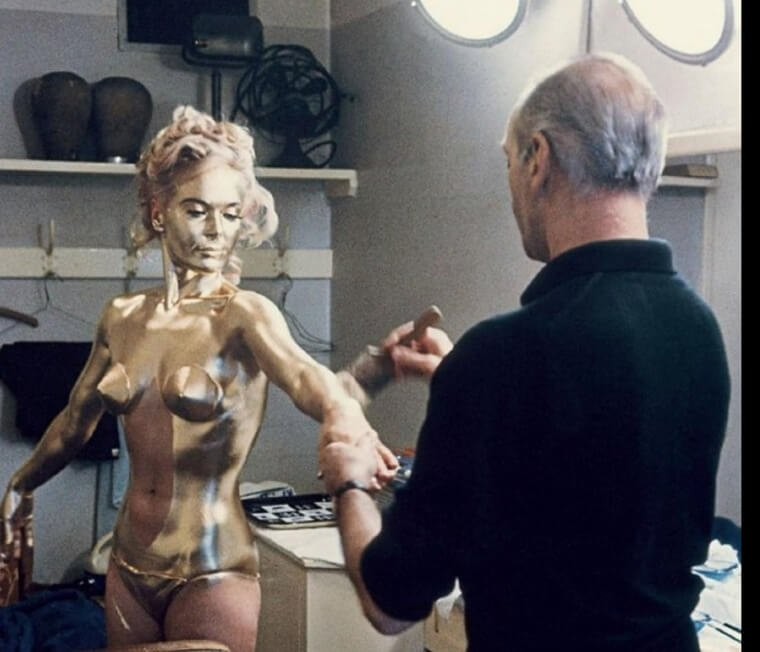
The gold bikini itself was a simple lurex fabric, but its cultural impact remains worth millions in brand recognition today.
The Forbidden Red Dress of Bette Davis in "Jezebel"
In the film, Davis’s character causes a scandal by wearing a red dress to a ball where all unmarried women were expected to wear white. However, since the film was shot in black and white, the "red" dress was actually a dark bronze or rust color. Orry-Kelly designed it this way because a true red would have appeared flat or grey on the film stock of the time. The dress became a symbol of cinematic rebellion.
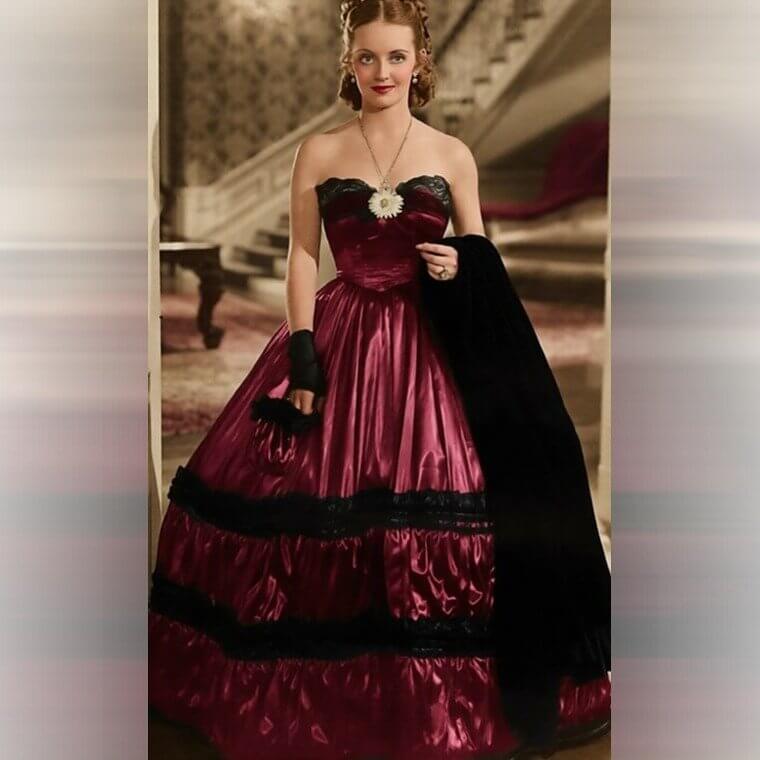
The actual garment is a prized piece of the Warner Bros. corporate collection, serving as a reminder of how color theory worked in the old studio days.
Cyd Charisse’s Leggy Green Tunic in "Singin’ in the Rain"
During the "Broadway Melody" sequence, Charisse wore a green sequined tunic with a long chiffon scarf. The costume was designed specifically to highlight her famous legs, which were allegedly insured for a million dollars at the time. The tunic had to be constructed with elasticized seams to allow for her incredible athletic range of motion. The vibrant emerald green was a specific request to contrast with the noir-style set.
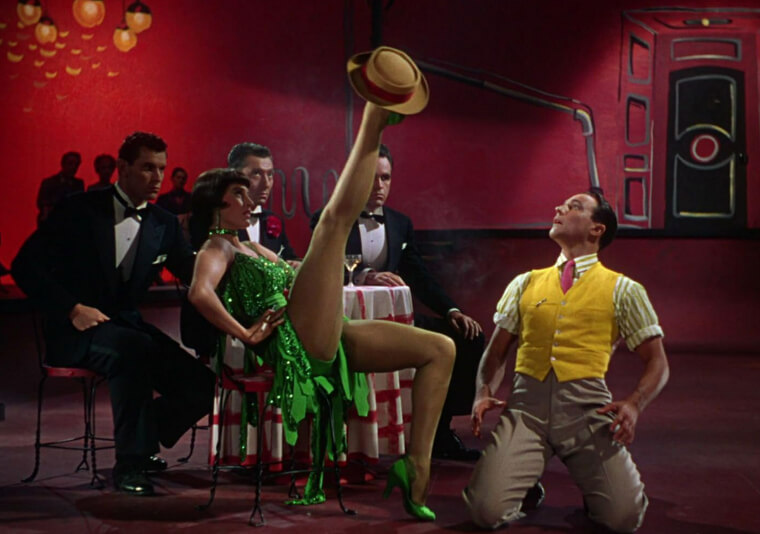
This piece of dance history is a favorite for museum exhibits, symbolizing the transition of the MGM musical into more modern, jazzy territory.
The Secret Support of Jane Russell’s Metallic Gown in "Gentlemen Prefer Blondes"
While Marilyn Monroe wore pink, Jane Russell donned a stunning black-and-gold beaded gown that required internal scaffolding. The dress was so heavy—allegedly weighing over 30 pounds—that Russell had to lean against a "slant board" between takes instead of sitting down to avoid wrinkling the fabric or straining her back. The intricate beadwork was done by hand, and the dress featured a high slit that was considered quite daring for 1953.
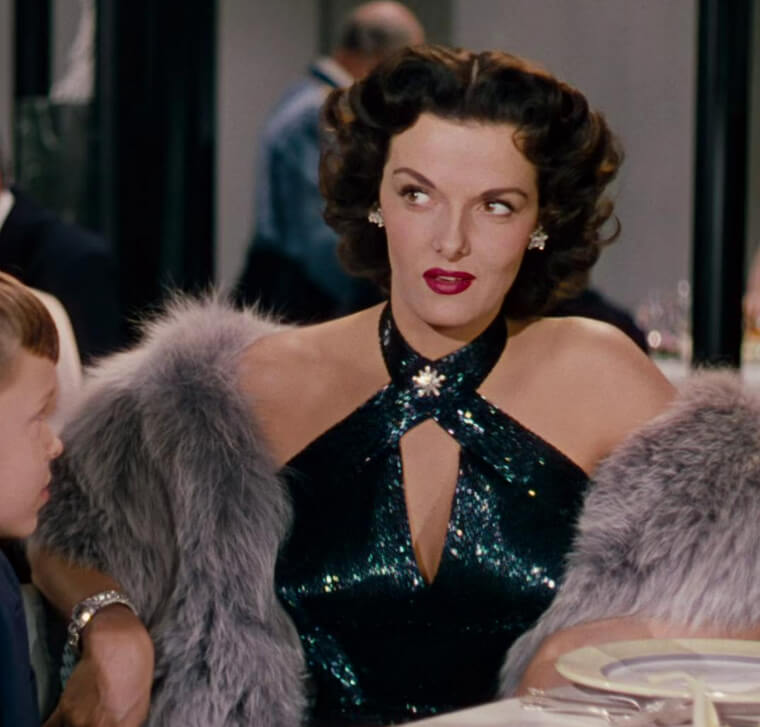
This garment is currently held in a private collection, serving as a reminder of the physical endurance required by the stars of yesteryear.
Hedy Lamarr’s Peacock Gown From "Samson and Delilah"
Edith Head won an Oscar for this costume, which utilized thousands of genuine peacock feathers. The gown was reportedly so heavy and delicate that Lamarr could only wear it for short bursts of time. Interestingly, Lamarr, who was also a brilliant inventor, allegedly suggested ways to make the feather attachments more secure. The vibrant blues and greens of the feathers were a sensation in early Technicolor.
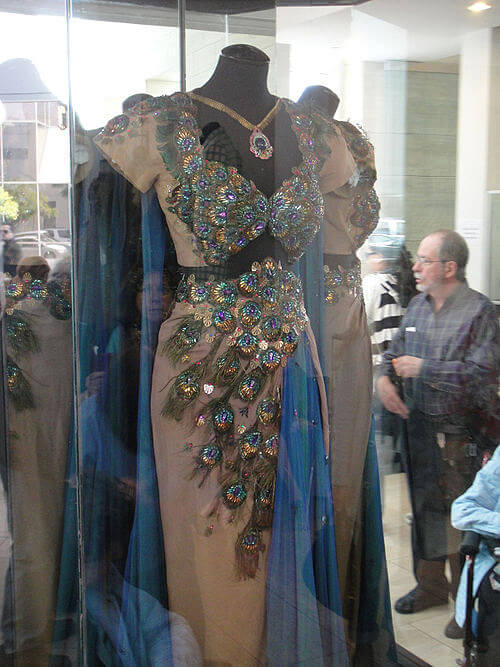
The original dress has been painstakingly restored and is occasionally exhibited at the Academy Museum of Motion Pictures, representing the height of Biblical epic costume excess.
Doris Day’s "Pillow Talk" Lounge Wear and the Rise of the Career Girl
Jean Louis created a wardrobe for Doris Day that redefined the "working woman" aesthetic in the late 50s. Her white fox fur-trimmed coats and structured day dresses were peak glamour. The most intriguing piece was a silk lounging set that reportedly featured an internal support system so Day would look perfectly "posed" even while reclining on a sofa. This wardrobe helped transition Hollywood from the dramatic 40s into the bright, pop-art 60s.
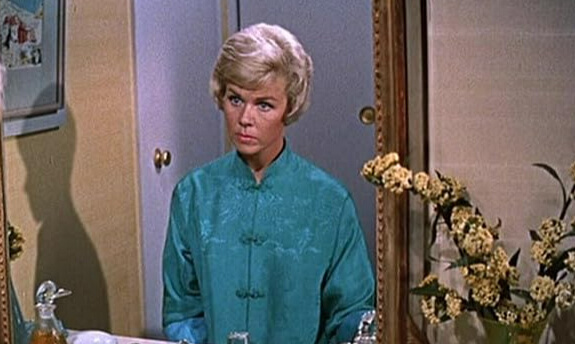
Many of these pieces were sold during the Doris Day estate auction in 2020, fetching prices far above their initial estimates.
The Gilded Opulence of Lana Turner in "The Merry Widow"
Lana Turner was the "Sweater Girl," but in this film, she was a vision of 19th-century luxury. Her wardrobe featured corsets that were reportedly so tight they measured only 18 inches. The black lace and gold silk gowns were designed by Helen Rose and used authentic vintage lace that was nearly 100 years old even in 1952. Turner allegedly found the costumes so beautiful she requested the studio allow her to purchase several for her personal use.
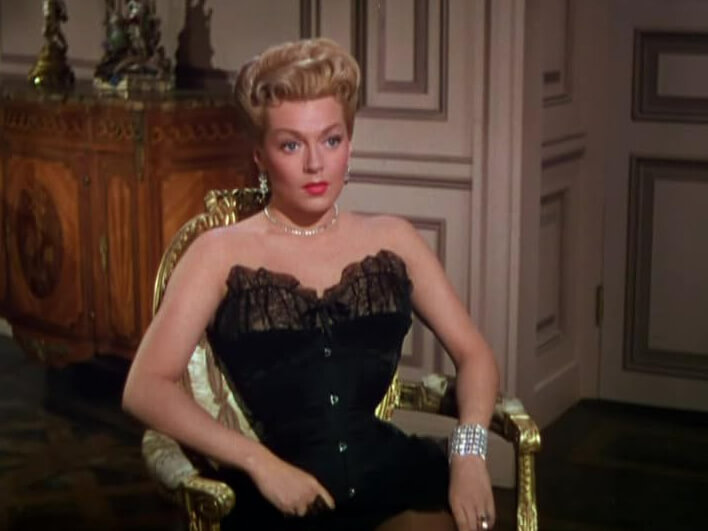
These gowns represent the peak of Hollywood’s obsession with European aristocracy and high-fashion period drama.
Joan Crawford’s Shoulder Pads in "Mildred Pierce"
While most people think of gowns, Crawford’s structured suits changed fashion history. Designer Adrian added massive shoulder pads to her wardrobe to balance her wide hips and give her a more "formidable" presence on screen. This look reportedly started a massive fashion trend among American women during the 1940s. Crawford was so enamored with the look that she allegedly insisted on shoulder pads in her nightgowns too!
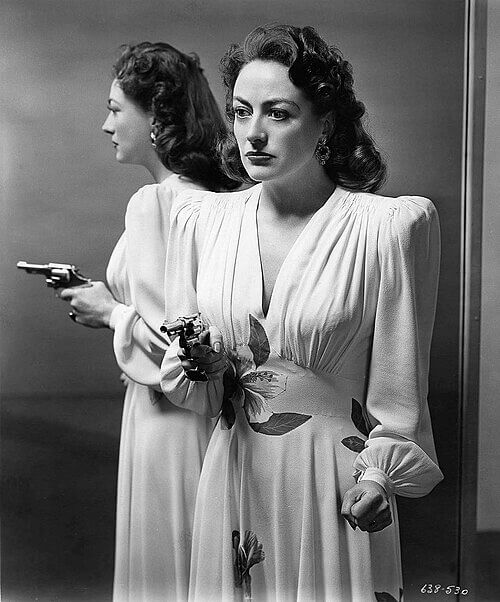
The original Mildred Pierce suits are iconic examples of how costume design can define a character’s internal strength and social climbing ambitions.
Debbie Reynolds’ Good Morning Flapper Dress in "Singin’ in the Rain"
Walter Plunkett went to great lengths to recreate the 1920s for this 1952 film. Reynolds’ green-and-white drop-waist dress was made of silk with intricate beadwork that had to survive a rigorous dance number. Because of the heavy sweat involved in dancing under hot lights, several identical versions were reportedly made. Reynolds was a massive collector of Hollywood history herself, and she kept this dress for decades.
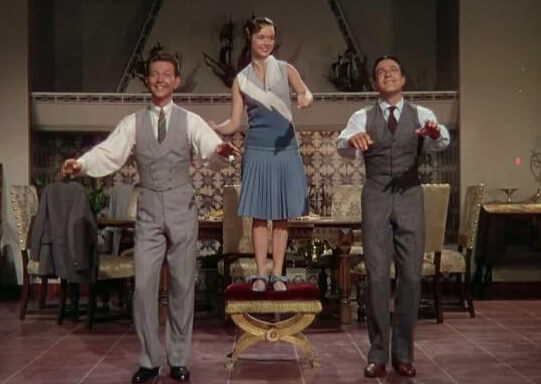
When her collection was sold, this piece was a highlight, representing the joy and technical perfection of the MGM musical era.
The Scandalous Sheer Illusions of Marlene Dietrich in "Destry Rides Again"
Marlene Dietrich was a pioneer of the "nude" look long before it was a modern trend. For her role as Frenchy, she wore a dress that was reportedly made of such fine souffle silk it appeared transparent under the studio lights. To maintain the illusion, thousands of tiny beads were sewn by hand to cover specific areas while catching the light. Dietrich was famously involved in her own fittings.
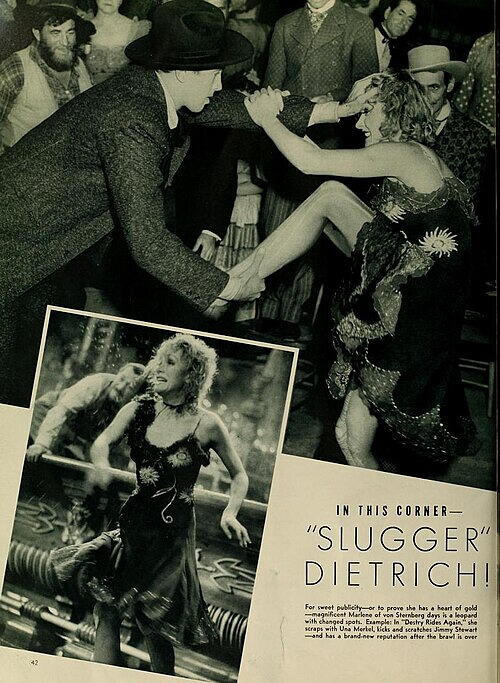
She often stood for hours to ensure the beads hit her frame perfectly. Today, these dresses are considered the holy grail for collectors of Golden Age cinema costumes.
Lauren Bacall’s Houndstooth Suit From "To Have and Have Not"
At just 19 years old, Bacall captivated audiences in a stunningly tailored houndstooth suit. The heavy wool fabric gave her a stature that belied her young age. Designer Leah Rhodes used the pattern to make Bacall stand out against the shadowy, tropical setting of the film. The suit featured a cinched waist and padded shoulders, creating a silhouette that became synonymous with the "cool" 1940s aesthetic. Bacall reportedly kept the suit for years.
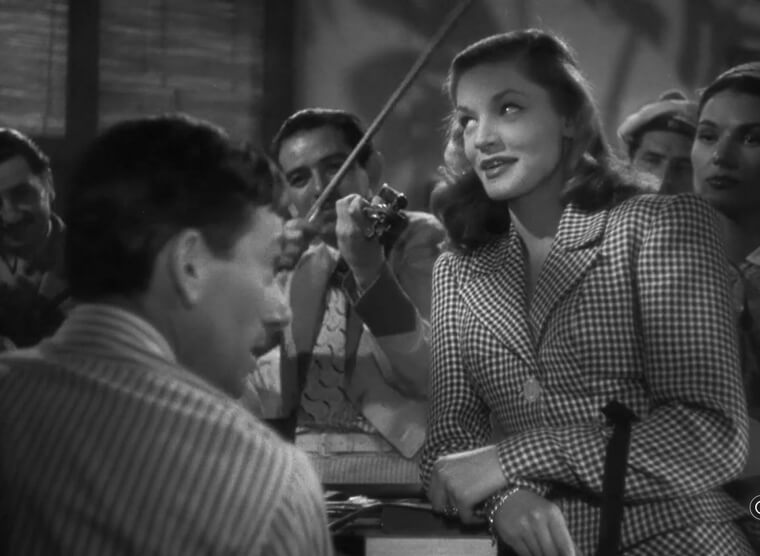
And it was eventually sold at a celebrity estate auction, where it was hailed as a masterpiece of Golden Age tailoring.
Natalie Wood’s Bold Crimson Coat From the Rebellion of "Rebel Without a Cause"
In a film dominated by the primary colors of youth, Wood’s red coat served as a visual anchor. Designed by Moss Mabry, the coat was meant to contrast with James Dean’s red windbreaker, symbolizing their shared isolation. The fabric was a heavy wool blend, chosen to look structured and protective. Wood reportedly loved the coat so much she kept it after filming concluded. Many items from the film were lost or discarded.
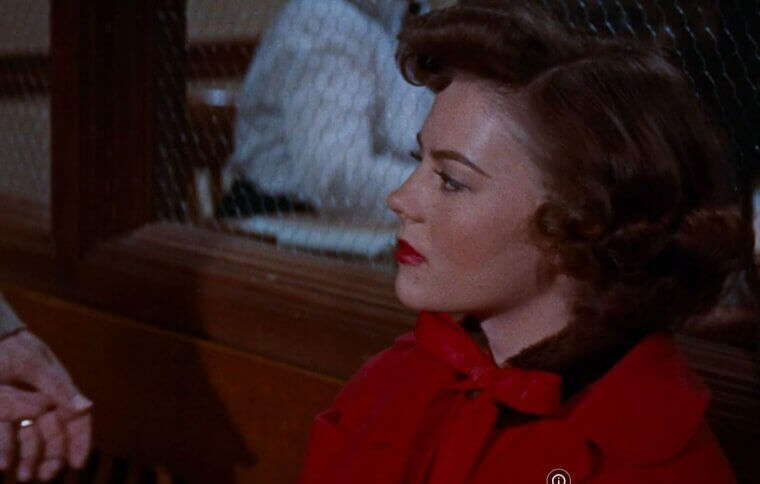
But this specific garment occasionally surfaces in high-end memorabilia circles, representing the transition of Hollywood glamour from formal gowns to iconic streetwear.
Barbara Stanwyck’s Dangerous Anklet and Velvet Gown in "Double Indemnity"
In this noir masterpiece, the costume was as much a character as the actress. The tight-fitting, long-sleeved gown was designed by Edith Head to look "expensive but tacky," reflecting Stanwyck’s manipulative character. The most famous "piece" wasn't a garment at all, but the gold anklet she wore, which reportedly caught the light in a way that signaled danger to the audience. The gown was made of a synthetic velvet that shimmered under the high-contrast lighting.
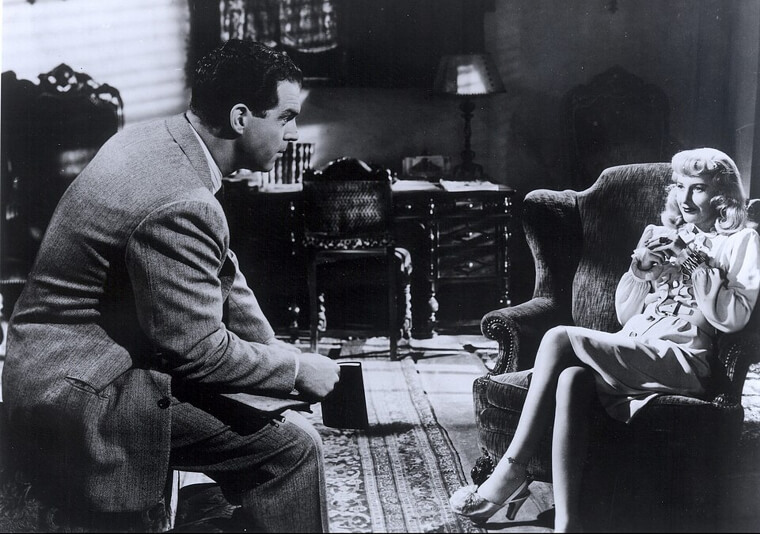
This outfit helped define the "bad girl" aesthetic of the 1940s and is frequently cited in film school fashion courses.
The Imperial Grandeur of Greer Garson’s Wartime Suits in "Mrs. Miniver"
During the 1940s, fashion was dictated by fabric rations, but Greer Garson’s wardrobe managed to look regal nonetheless. These suits were made from high-quality wool but featured clever tailoring to minimize fabric waste, adhering to the "Utility Clothing" standards of the era. The sharp shoulders and nipped waists became a symbol of female strength during the war. Garson allegedly insisted on wearing silk stockings even when they were unavailable to the public, just to stay in character.
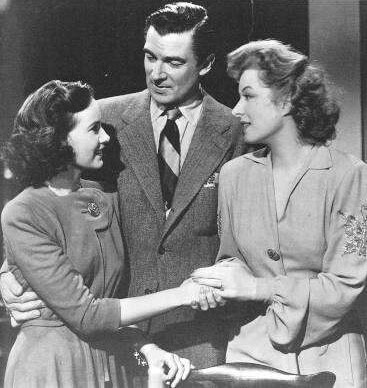
Today, these suits are held in studio archives as examples of how Hollywood navigated the challenges of World War II.
The Jean Louis Sparkle of Judy Holliday in "The Solid Gold Cadillac"
Judy Holliday played the "dumb blonde" who was actually the smartest person in the room, and her wardrobe reflected that. Her gold-threaded suits and shimmering evening gowns were designed by Jean Louis to make her look like she was literally made of wealth. The fabric was a unique blend of silk and metallic tinsel that was reportedly very scratchy to wear. Holliday allegedly joked that she was "bleeding for her art" because of the stiff fabric.
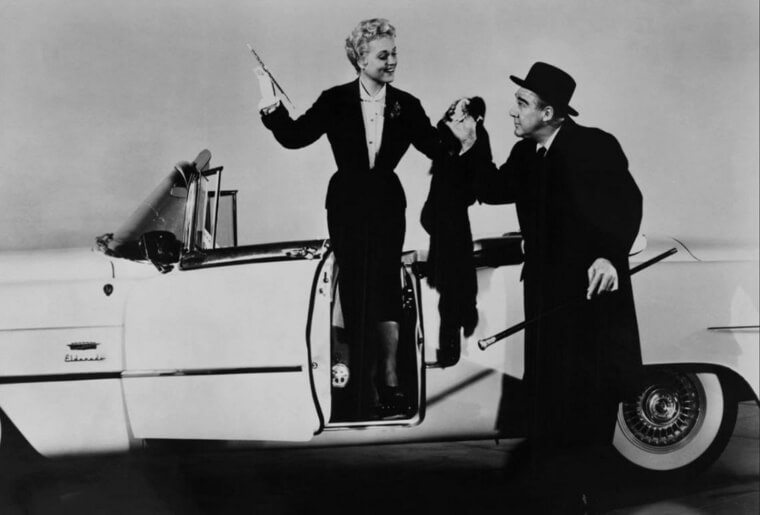
Today, these suits are considered masterworks of mid-century tailoring, blending comedy with high-society fashion.
The Mona Lisa Gown of Sophia Loren in "Marriage Italian Style"
Piero Tosi designed a series of dresses for Loren that showcased her transition from a streetwalker to a dignified wife. The most iconic was a floral print dress that managed to look both humble and incredibly glamorous because of Loren’s presence. The fabric was a simple printed cotton, but it was tailored with the same precision as a Dior gown. This piece is significant because it showed that Hollywood glamour didn't always need diamonds and fur.
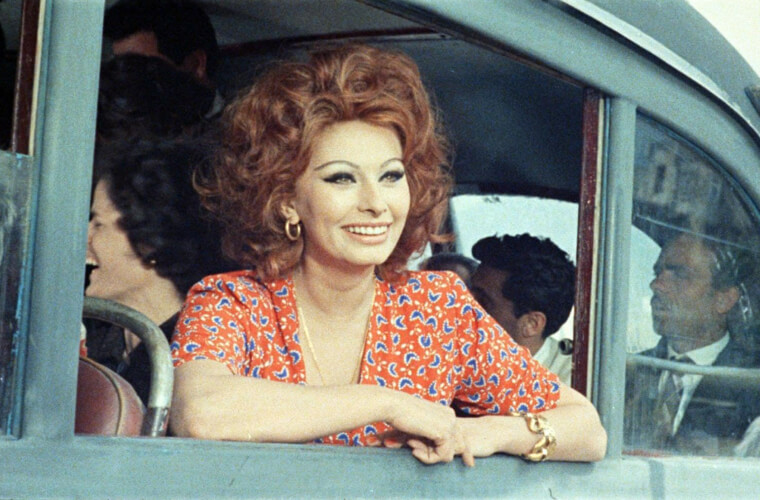
Sometimes, it just needed a master tailor and the world’s most beautiful woman.